Frameworks
A common language for personalisation and omnichannel marketing
Two models, each with one job: give everyone in the room, technical or commercial, the same vocabulary before the conversation about the customer experience even starts.
From Hello $Firstname
The Bowtie of Personalisation
Personalisation is defined here as a distinct communication tactic: showing or hiding content in ways that match a person's preferences, explicit or inferred, to create both immediate and future business value. The Bowtie is tied from two sides. On the left are your insights: who the customer is, what they need, and when they are open to interaction. On the right is your content: messages and content feeds. In the knot in the middle, insight and content meet and become a coherent customer experience.
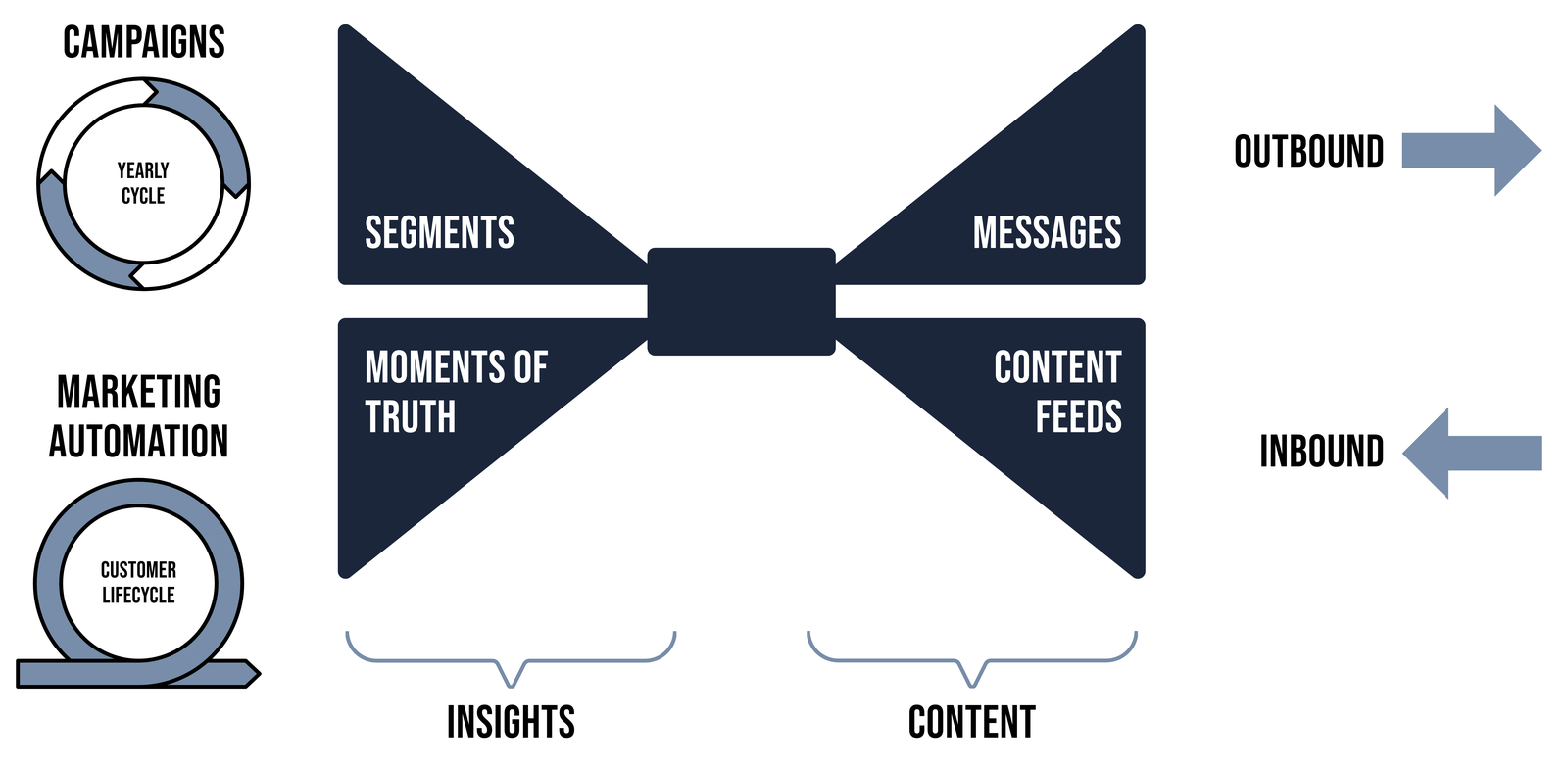
Segments
Groups of customers defined by data and behaviour, the starting point on the insight side of the bowtie.
Messages
Communication built to speak directly to a segment, on the content side of the bowtie.
Moments of Truth
The critical moments in the customer journey where personalisation makes the biggest difference.
Content Feeds
Recommendations, such as products or articles, structured so they are dynamically matched to insight and fit the message.
Just as tying a real bow tie takes practice, personalisation requires coordination, discipline and creativity. Done right, the result is a seamless, memorable customer experience that builds loyalty and produces measurable results.
From Hello $Firstname
The Pyramid of Personalisation
Where the Bowtie explains what personalisation is made of, the Pyramid explains how mature your organisation is at doing it, on two sides: the front end your customers see, and the back end that makes it possible. Each side has three faces: Campaigns, Marketing Automation and Inbound Platforms on the front end; Technology, People & Skills and Governance on the back end.
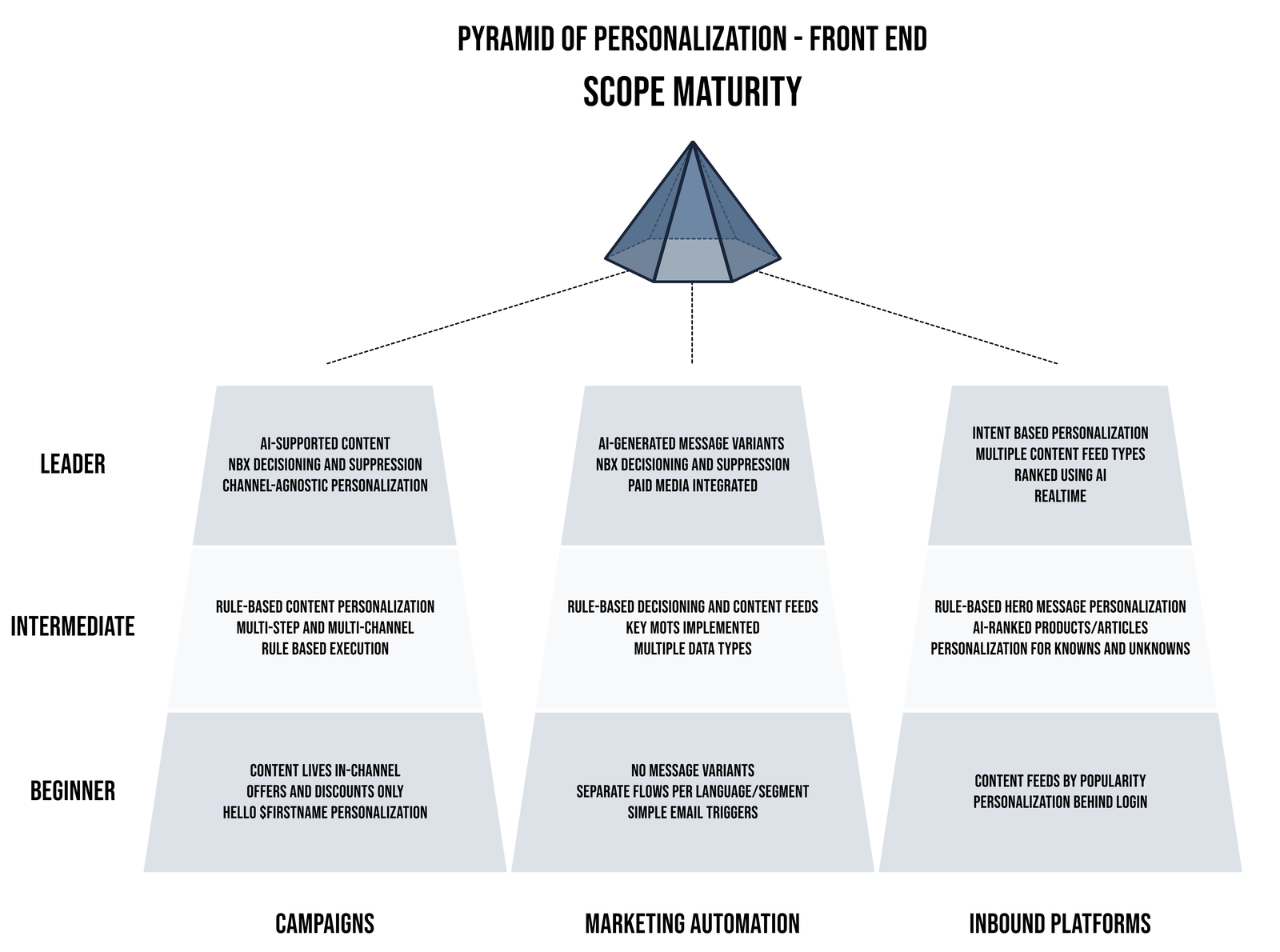
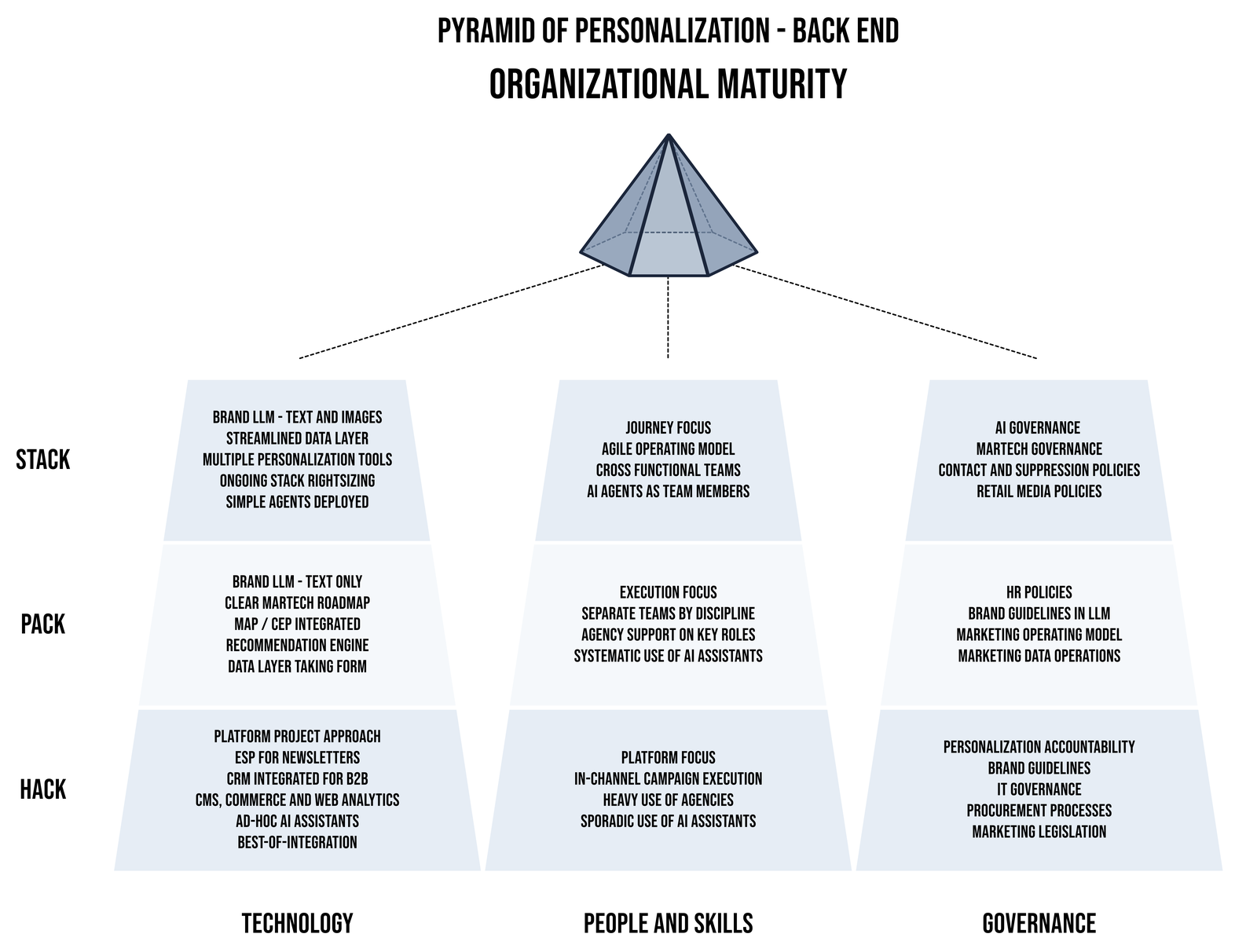
See the detailed breakdown for each face on the Resources page →
From Make It All About Me
The Omnichannel Hexagon
Consumers increasingly expect it to be easy to do business with a company: that the company knows what interests them, and that they can communicate and buy across channels seamlessly. The Omnichannel Hexagon is built from a study of what companies that succeed at this have in common. Each of the six disciplines below has three levels of maturity, read from the outside in, moving a company closer to putting the customer at the centre of every communication and sale.
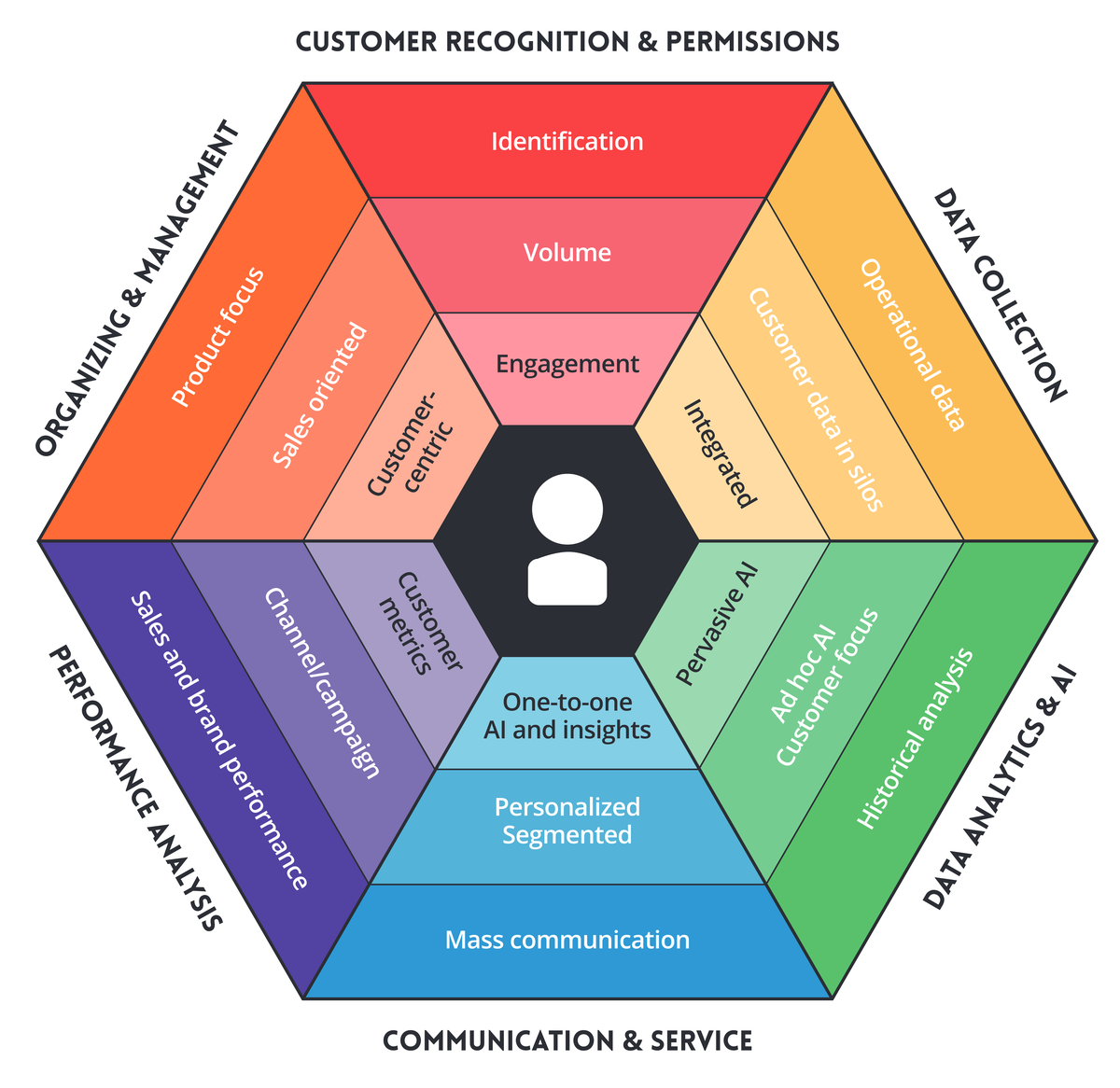
01 · Customer Recognition & Permission
Recognising the customer across channels and holding permission to communicate with them on their own media: SMS, email, and beyond.
02 · Data Collection
Collecting and integrating data into a single profile per customer: your organisation's memory of each individual.
03 · Data Analysis & AI
Once enough data exists on enough customers, using it to gain insight into customer groups and individual behaviour and wishes.
04 · Communication & Service
Turning the groundwork from the first three disciplines into one-to-one communication, delivered cost-effectively rather than as mass messaging.
05 · Performance Analysis
Measuring sales and brand performance, channels, campaigns and individual customers, so you know whether the omnichannel effort is working.
06 · Organisation
Shifting the company's focus from product and sales to the individual customer, and organising accordingly.
Take the test
How mature is your organisation for omnichannel marketing?
Rate your organisation on each of the six disciplines. This is a quick self-assessment, not a scientific survey, but it will show you where to focus next.